Our February CLG event was a talk about the history of library architecture, by the author of The Library: A World History, James Campbell. He gave us a quick overview of everything, a whistle-stop tour of significant libraries from around the world, accompanied by some stunning slides.
Apparently libraries were originally used merely to house scrolls or books, and instead of studying within the library you would come and take away the item to needed to peruse elsewhere. This impacted on the architecture as there was no need to plan for people to actually use it. James also said that there’s a possibility Greek and Latin libraries might have purposefully been built together, to complement each other when those languages were both vitally important for education. He took us everywhere from a monastery in South Korea, where a huge library houses just one book and its corresponding printing blocks, to Michelangelo’s Medici Library (which is beautiful but apparently not practical at all!), to the Biblioteque Nationale and the National Library of Beijing, shining examples of modern library architecture. We saw libraries change from repositories to interactive study-spaces, and the rise of the public library from the 19th century onwards. From 16th-century stalls to (apparently James’ favourite) 18th-century Rococo designs and 19th-century barrel-vaults, the library has always adapted to the architecture of the time in new and surprising ways, including hidden doors and libraries completely made from iron!
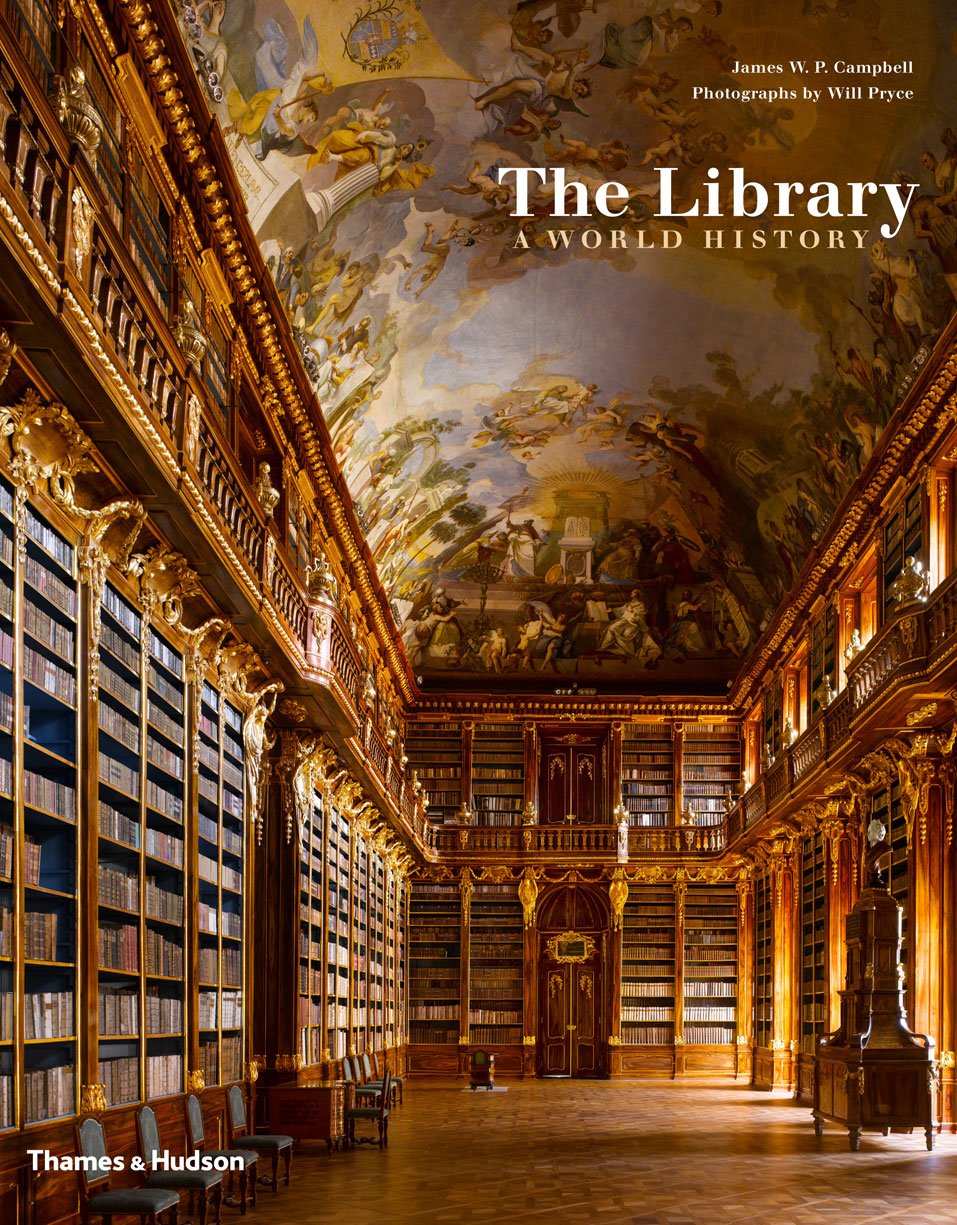
It was a really interesting lecture and made me want to go travelling just to see libraries around the world. Talk about your busman’s holiday…! There really are some amazing library buildings out there. I’m also definitely going to be buying his book, if only to give me something to aim at for future holidays!
By Lucy Woolhouse, Graduate Trainee Librarian at Christ's College.
Monday, 10 March 2014
Thursday, 11 July 2013
A Library Camp for the East of England: #libcampeast
This CILIP East of England event may be of interest to CLG members:
Library Camp East: Sat 7th Sept, 10.00 - 16:30, Harlow College
Join us for this free event sponsored by CILIP East Members' Network and hosted by Harlow College (http://goo.gl/maps/8lgLc).
Bookings open on Monday 15 July at 09:30 at http://bit.ly/170nhnD (the event page will be password protected until that time). We’ve reserved 20 tickets for mid-career library professionals/paraprofessionals.
In the meantime, see the wiki at http://bit.ly/13Reypb for further details including information on how to apply for one of two travel bursaries on offer. You can also keep up to date by following @LibCampEast. The hashtag for this event is #libcampeast.
Labels:
CILIP,
Library Camp
Thursday, 27 June 2013
Talk by Michelle Spring, 18th June 2013
Last week CLG members gathered at the English Faculty for a talk by the author Michelle Spring. Michelle's topic was 'What does a writer do when she's not writing? Teaching, mentoring and the Royal Literary Fund'.
After working as a professor of Sociology at Anglia Ruskin and Cambridge University, Michelle turned her hand to writing crime fiction. However she was able to combine her new career with her passion for teaching by becoming a Royal Literary Fund Fellow. The RLF Fellowship scheme places writers in Higher Education institutions, to support students and staff in their writing. Currently there are three partner institutions in Cambridge - Anglia Ruskin University, Newnham College and Magdelene College, and Michelle has worked in all three of these institutions as an RLF Fellow.
The RLF Fellowship scheme provides students with the opportunity for confidential one-to-one sessions on any aspect of writing they are having difficulties with, ranging from correct use of a semicolon to turning a dissertation into a publishable article. This kind of support is not always available from supervisors and tutors, and can make a big difference.
Michelle also talked about her experiences teaching creative writing courses and mentoring less experienced authors. While creative writing courses are excellent at providing a support network and making new authors get writing and keep on writing, mentoring develops a stronger, long-lasting relationship which can be very rewarding for both the mentee and the mentor.
I thoroughly enjoyed this event. Michelle was an engaging and down-to-earth speaker, and I think many of us were inspired to find new ways to support our students with their writing, or indeed to pick up the pen ourselves! Michelle had brought along a list of recommended books on writing, which I have copied below:
Elizabeth Benedict, The Joy of Writing Sex: A Guide for Fiction Writers
Dorothea Brande, Becoming a Writer
John Gardner, The Art of Fiction: Notes on Craft for Young Writers
Stephen King, On Writing: A Memoir of the Craft
Anne Lamott, Bird by Bird: Instructions on Writing and Life
David Lodge, The Art of Fiction, Illustrated from Classic and Modern Texts
Michelle Spring and Laurie R. King, Crime and Thriller Writing: A Writers' and Artists' Companion
William Strunk, Jr. & E. B. White, The Elements of Style
Reference for writers:
Writers' and Artists' Yearbook
Collins Easy Learning Grammar and Punctuation
The Merriam-Webster Dictionary of Synonyms and Antonyms
Michelle Spring's novels:
Every Breath You Take
Running for Shelter
Standing in the Shadows
Nights in White Satin
In the Midnight Hour
The Night Lawyer
After working as a professor of Sociology at Anglia Ruskin and Cambridge University, Michelle turned her hand to writing crime fiction. However she was able to combine her new career with her passion for teaching by becoming a Royal Literary Fund Fellow. The RLF Fellowship scheme places writers in Higher Education institutions, to support students and staff in their writing. Currently there are three partner institutions in Cambridge - Anglia Ruskin University, Newnham College and Magdelene College, and Michelle has worked in all three of these institutions as an RLF Fellow.
The RLF Fellowship scheme provides students with the opportunity for confidential one-to-one sessions on any aspect of writing they are having difficulties with, ranging from correct use of a semicolon to turning a dissertation into a publishable article. This kind of support is not always available from supervisors and tutors, and can make a big difference.
Michelle also talked about her experiences teaching creative writing courses and mentoring less experienced authors. While creative writing courses are excellent at providing a support network and making new authors get writing and keep on writing, mentoring develops a stronger, long-lasting relationship which can be very rewarding for both the mentee and the mentor.
![]() |
| Michelle with some CLG members |
Elizabeth Benedict, The Joy of Writing Sex: A Guide for Fiction Writers
Dorothea Brande, Becoming a Writer
John Gardner, The Art of Fiction: Notes on Craft for Young Writers
Stephen King, On Writing: A Memoir of the Craft
Anne Lamott, Bird by Bird: Instructions on Writing and Life
David Lodge, The Art of Fiction, Illustrated from Classic and Modern Texts
Michelle Spring and Laurie R. King, Crime and Thriller Writing: A Writers' and Artists' Companion
William Strunk, Jr. & E. B. White, The Elements of Style
Reference for writers:
Writers' and Artists' Yearbook
Collins Easy Learning Grammar and Punctuation
The Merriam-Webster Dictionary of Synonyms and Antonyms
Michelle Spring's novels:
Every Breath You Take
Running for Shelter
Standing in the Shadows
Nights in White Satin
In the Midnight Hour
The Night Lawyer
Wednesday, 15 May 2013
Samuel Butler Project - Presentation by Rebecca Watts, Butler Project Associate
![]() |
| Samuel Butler - Victorian polymath (1835-1902) |
The Butler Collection includes around 100 boxes of papers, articles and correspondence, more than 650 printed books, 450 paintings, watercolours, drawings and prints, 50 artefacts and a substantial photographic archive.
![]() |
| Selection of Samuel Butler's paintings and sketches |
Rebecca also provided an insight into managing such a diverse archive, including deciding which items should be conserved, creating a searchable catalogue, organising events and exhibitions, working with schools and putting Butler scholars in contact with one another.
The Butler Project began in July 2011 and runs until July 2013. The project is funded jointly by the Heritage Lottery Fund and St John’s College. For further information visit http://www.joh.cam.ac.uk/samuel-butler-project.
![]() |
| Rebecca Watts (Butler Project Associate) and Rachel Walker (Temporary Library Projects Assistant) |
Monday, 13 May 2013
Booking now open for ARLG Eastern Librarian TeachMeet
Here is another local event which may be of interest to CLG members:
Council Chamber, University of East Anglia, Norwich NR4 7TJ (http://goo.gl/maps/0qavr)
Join us for this launch event of the Eastern Division of CILIP's Academic and Research Libraries Group. Bookings will go live at http://arlgeasternlibtm.eventbrite.co.uk/ at 9:00 on Monday 13 May. The site will not be publicly accessible until that time.
It's open to anyone interested in teaching and technology in libraries and is completely free, including light refreshments. You don't have to be a member of CILIP or ARLG to attend.
New to Librarian TeachMeet? Learn more here.
Come along as an observer to network and share ideas with colleagues from across the region. You can also sign up to give a 3 minute nanopresentation or 7 minute micropresentation to share your teaching tips and/or suggestions of tools/technology you've found useful in your work.
The combination of short talks and unconference style creates a relaxed, fun and supportive atmosphere making Librarian TeachMeets ideal events for first time speakers or those looking to gain more experience in presenting. So, don't be shy, sign up and get involved!
Optional tours of the UEA Library are
also offered ahead of the TeachMeet at 12:30, 13:00 and
13:30.
Any questions? Contact us at arlgeastern@gmail.com. You can also follow us at @ARLGEastern for updates on this event. The hashtag for this event is #arlgeastlibtm.
ARLG Eastern
Librarian TeachMeet - Talking teaching: tips, tools and
technology
Saturday 15 June, 14:00 to
17:30Council Chamber, University of East Anglia, Norwich NR4 7TJ (http://goo.gl/maps/0qavr)
Join us for this launch event of the Eastern Division of CILIP's Academic and Research Libraries Group. Bookings will go live at http://arlgeasternlibtm.eventbrite.co.uk/ at 9:00 on Monday 13 May. The site will not be publicly accessible until that time.
It's open to anyone interested in teaching and technology in libraries and is completely free, including light refreshments. You don't have to be a member of CILIP or ARLG to attend.
New to Librarian TeachMeet? Learn more here.
Come along as an observer to network and share ideas with colleagues from across the region. You can also sign up to give a 3 minute nanopresentation or 7 minute micropresentation to share your teaching tips and/or suggestions of tools/technology you've found useful in your work.
The combination of short talks and unconference style creates a relaxed, fun and supportive atmosphere making Librarian TeachMeets ideal events for first time speakers or those looking to gain more experience in presenting. So, don't be shy, sign up and get involved!
Not sure what to
talk about? Check out the following links for examples from
previous Librarian TeachMeets across the country:
Any questions? Contact us at arlgeastern@gmail.com. You can also follow us at @ARLGEastern for updates on this event. The hashtag for this event is #arlgeastlibtm.
Tuesday, 7 May 2013
Special Collections Lecture - 'The Uses of Scientific Heritage: The Collections of the Royal Institution'
CLG members may be interested in the upcoming Emmanuel College Library Special Collections Lecture on 6th June.
Speaker: Professor Frank James, Head of Collections and Heritage, Professor of History of Science, at the Royal Institution
'The Uses of Scientific Heritage: The Collections of the Royal Institution'
The Royal Institution possesses a remarkable heritage in terms of manuscripts, objects and images going back to its foundation in 1799. These relate not only to institutional history but to those who have researched, lectured and lived in its Mayfair building. Those who figure prominently in the institution's heritage include Humphry Davy, Michael Faraday, John Tyndall, James Dewar, William Bragg, Lawrence Bragg and more recently George Porter, all of whose papers are held in the collections. Significant objects in the collections include the first miners' safety lamp, the first electrical transformer and generator, the first thermos flask and so on. This talk will discuss the issues surrounding managing this diverse collection and how it can be used to illustrate the development of science over the past two centuries or so, as well as conveying contemporary messages about the role of science in society and culture.
Numbers are limited. Booking is essential and entry will be by free ticket only. Please book early by either e-mailing the College Library at library@emma.cam.ac.uk or telephone (01223) (3)34233. A ticket will be sent to you on receipt of booking.
Speaker: Professor Frank James, Head of Collections and Heritage, Professor of History of Science, at the Royal Institution
'The Uses of Scientific Heritage: The Collections of the Royal Institution'
The Royal Institution possesses a remarkable heritage in terms of manuscripts, objects and images going back to its foundation in 1799. These relate not only to institutional history but to those who have researched, lectured and lived in its Mayfair building. Those who figure prominently in the institution's heritage include Humphry Davy, Michael Faraday, John Tyndall, James Dewar, William Bragg, Lawrence Bragg and more recently George Porter, all of whose papers are held in the collections. Significant objects in the collections include the first miners' safety lamp, the first electrical transformer and generator, the first thermos flask and so on. This talk will discuss the issues surrounding managing this diverse collection and how it can be used to illustrate the development of science over the past two centuries or so, as well as conveying contemporary messages about the role of science in society and culture.
Date: Thursday 6th June 2013
Time: 14:15
Venue: The Laing Centre, Atrium, Emmanuel College Library
Numbers are limited. Booking is essential and entry will be by free ticket only. Please book early by either e-mailing the College Library at library@emma.cam.ac.uk or telephone (01223) (3)34233. A ticket will be sent to you on receipt of booking.
Labels:
Royal Institution,
Talks
Visit to the Faculty of Architecture & History of Art
It seems to me that libraries are everywhere in Cambridge, and it never ceases to surprise me when I discover a new one hidden seemingly in plain sight. The Faculty of Architecture and History of Art houses one such library, tucked away in an elegant Victorian terrace just a stone’s throw away from the hustle and bustle of Trumpington Road.
Susanne Jennings provided us with an introduction to the library, which is split into two very distinctive floors. We began our tour on the ground floor of the library, which is very charming and traditional in style, with beautiful original moulded ceilings. Tanya Zhimbiev led us through this floor of the building, pointing out interesting pieces of antique furniture which still see everyday use. Works by local artists are on display in the foyer of the library, connecting the faculty with the wider Cambridge community. We were then shown some wonderful selections from the Maurice Webb Collection of rare books by Matthew Patmore.
The basement of the Faculty of Architecture and History of Art Library is, in contrast, distinctly utilitarian. Designed primarily to maximise storage space, it is remarkable to see just how many shelves have been squeezed into what was once a caretaker’s flat. Every nook and cranny is filled with books, and a small RIBA-maintained library of products, standards and services sits tucked away in a corner.
We were given time at the end of the tour to explore the library and chat amongst ourselves. It was a very enjoyable trip and I very much appreciated the opportunity to discover another of Cambridge’s unique libraries.
YiWen Hon, Graduate Library Trainee at St John's College
Susanne Jennings provided us with an introduction to the library, which is split into two very distinctive floors. We began our tour on the ground floor of the library, which is very charming and traditional in style, with beautiful original moulded ceilings. Tanya Zhimbiev led us through this floor of the building, pointing out interesting pieces of antique furniture which still see everyday use. Works by local artists are on display in the foyer of the library, connecting the faculty with the wider Cambridge community. We were then shown some wonderful selections from the Maurice Webb Collection of rare books by Matthew Patmore.
The basement of the Faculty of Architecture and History of Art Library is, in contrast, distinctly utilitarian. Designed primarily to maximise storage space, it is remarkable to see just how many shelves have been squeezed into what was once a caretaker’s flat. Every nook and cranny is filled with books, and a small RIBA-maintained library of products, standards and services sits tucked away in a corner.
We were given time at the end of the tour to explore the library and chat amongst ourselves. It was a very enjoyable trip and I very much appreciated the opportunity to discover another of Cambridge’s unique libraries.
YiWen Hon, Graduate Library Trainee at St John's College
Wednesday, 10 April 2013
CILIP East of England event - Reflective Writing Workshop
Those currently working towards CILIP Chartership, Certification or Revalidation (or just thinking about it!) might be interested in the following
course:
Facilitated by Margaret Chapman, the workshop will help you to appreciate the importance of reflection, recognise the differences between descriptive writing and reflective writing (fundamental when writing your evaluative statement!), develop styles of reflective writing...and more.
The course comes to the region for the first time since 2011, so if you are working towards a CILIP qualification, make sure you don't miss out. More information, including delegate rates, is available on the CILIP East blog: http://ow.ly/jP4u8.
There is an early bird discount for CILIP members ending on 20th April; bookings close on 30th April. You can book your place at: http://ow.ly/jjXx9.
Reflective Writing workshop
Date: Wednesday 8th May
Time: 2:00-5:00pm
Venue: Ely Public Library, 6 The Cloisters, Ely, Cambridgeshire, CB7 4ZH
Facilitated by Margaret Chapman, the workshop will help you to appreciate the importance of reflection, recognise the differences between descriptive writing and reflective writing (fundamental when writing your evaluative statement!), develop styles of reflective writing...and more.
The course comes to the region for the first time since 2011, so if you are working towards a CILIP qualification, make sure you don't miss out. More information, including delegate rates, is available on the CILIP East blog: http://ow.ly/jP4u8.
There is an early bird discount for CILIP members ending on 20th April; bookings close on 30th April. You can book your place at: http://ow.ly/jjXx9.
Labels:
Chartership,
CILIP,
Workshops
Tuesday, 5 March 2013
Cambridge Publishing Society event - Open Access academic publishing
Tonight at Anglia Ruskin University there is an event on Open Access academic publishing, organised by CAMPUS (Cambridge Publishing Society), which may be of interest to our members.
Time: Today, 5th March 2013 at 6pm - 8:15pm
Location: Harvard Room LAB 109, Anglia Ruskin University, East Road, Cambridge CB1 1BD
For more details, please see the CAMPUS website.
Monday, 26 November 2012
Visit to Cambridge University Press Museum
On Thursday 8th November, members of the Library Group headed to Cambridge University Press to learn about and view the recently opened Museum within the Press’ vast Edinburgh Building. The space is not usually open to the public, so the opportunity to visit was a real treat. The evening began with some much enjoyed tea and biscuits, kindly provided by the Press. Once these were consumed, we were led through the Press’ labyrinth of corridors towards the Museum. The space that greeted us was inviting and attractive; its layout, furnishing and lighting created the feeling of a high-quality exhibition space, and the professionally presented exhibits within the cases immediately sparked our curiosity. Before exploring their contents however, we sat down to an enjoyable talk by Ros Grooms, the University Press Project Archivist.
Ros began by telling us about the Press’ history: the University was given the right to appoint printers in 1534 by Letters Patent of Henry VIII (this document is held in the Archives); however it was not until 1584 following the appointment of Thomas Thomas as University Printer that printing really got underway (against a backdrop of fierce resistance from the Stationers’ Company in London). The site of Thomas’ press was opposite Great St Mary’s church, on what is now the Senate House lawn, meaning that the current CUP bookshop is virtually situated on the same spot as the University’s first press! We were told about the fascinating development of the Press over the centuries, with an array of illustrations taken from the archive. One particularly fascinating episode occurred in 1877, when the Press declined the proposal to publish what went on to become the Oxford English Dictionary. In a surprisingly informal letter, Furnivall (one of the founders of the new dictionary) confidently promised great profit from the project; however he sought a great outlay from the Press and admitted considerable delay before their investment would be returned – given the tone and demands of this initial proposition, the Press’ decision to decline the venture is perhaps not such a surprise!
Ros also talked to us about the creation of the Museum. The Museum showcases the Press’ history and highlights its achievements and activity. It was envisaged that a key use of the exhibition would be for staff to show visitors to the Press. Given that a visitor’s time to view material may be limited, it was decided to organise the material thematically so that each case could be viewed and understood independently. These themes include the Press’ early religious printing, some of its most notable works such as Newton’s Principia, its international activity, historic printing equipment, John Baskerville’s 1763 folio Bible, and material relating to staff activities and social events. In relation to this latter theme, it was very interesting to learn about the oral history archive, a project currently in its early stages. This has involved interviewing long-serving staff in order to record experiences and memories of working at the Press. Ros told us that this has given new insights and different perspectives on events that are often found recorded in the archive. For example, some of the interviews have described the nervous excitement that was felt during the preparations for The Queen’s visit to officially open the new Edinburgh Building in May 1981. These personal accounts will offer a valuable new dimension to the Press’ archive.
A wonderful evening was had by all, and our thanks go to Ros and others at the Press who made the visit possible and so enjoyable.
By Sarah Fletcher, Assistant Librarian at St Catharine's College Library.
Ros began by telling us about the Press’ history: the University was given the right to appoint printers in 1534 by Letters Patent of Henry VIII (this document is held in the Archives); however it was not until 1584 following the appointment of Thomas Thomas as University Printer that printing really got underway (against a backdrop of fierce resistance from the Stationers’ Company in London). The site of Thomas’ press was opposite Great St Mary’s church, on what is now the Senate House lawn, meaning that the current CUP bookshop is virtually situated on the same spot as the University’s first press! We were told about the fascinating development of the Press over the centuries, with an array of illustrations taken from the archive. One particularly fascinating episode occurred in 1877, when the Press declined the proposal to publish what went on to become the Oxford English Dictionary. In a surprisingly informal letter, Furnivall (one of the founders of the new dictionary) confidently promised great profit from the project; however he sought a great outlay from the Press and admitted considerable delay before their investment would be returned – given the tone and demands of this initial proposition, the Press’ decision to decline the venture is perhaps not such a surprise!
![]() |
| Photograph by Annie Johnson |
![]() |
| Photograph by Annie Johnson |
A wonderful evening was had by all, and our thanks go to Ros and others at the Press who made the visit possible and so enjoyable.
By Sarah Fletcher, Assistant Librarian at St Catharine's College Library.
Labels:
CUP,
Museums,
Oral history,
Printing,
Talks
Subscribe to:
Comments (Atom)


